On Time when You’re Not on Time

Clock

Here I sit in a state of aftershock from completing one of the toughest and most intense projects I’ve ever worked on. I have slowly fallen off the planet since it started, which is a weird thing to do when you have plenty of family and friends and are still trying to be active and act normal with them. And yet just by looking at my Facebook page, Google account, and blog it’s obvious that my interactions with all people have descended steadily to a minimum over the past year. Although physically present, I have felt a psychological absence. My heart and mind have become more and more a part of this absence, taken away, halfway to always in the clouds.

But let’s back up—a year and a month ago, I published a novella called Slash of Crimson with the small press Rymfire Books. Editor Armand Rosamilia gave me a shot, and though the splash may have been small, the swim felt good. The novella got generally good reviews and folks who read it seemed to enjoy it. I donated my first royalty payment to the Tom Piccirilli get-well fund. The reading I had scheduled fell through, but it at least got me back in touch with some writers, editors, and friends from years back and hey, I had a great interview with Dan O’Brien on Friday the Thirteenth last year where I got to hang around my creepy attic and talk about ‘urban’ New England and H.P. Lovecraft.

The momentary high was exciting enough to encourage me to revisit a project that took place in the Crimes of Heaven and Hell series after which this website is named, and rewrite it as the first full-length novel for the series. And so, Reigns the Wicked is now off to its first reader, an agent who I’ve worked with before who is willing to take a look.

Completing this rewrite was nothing short of brutal. Eureka moments of excitement with regard to the developing story were combined with quaking fears at the sheer magnitude of the task. For I was attempting a true rewrite. I was not just changing names and sentence structure, I was reworking an entire plot, adding and removing characters, changing the book’s beginning and end.

I can remember reading Stephen King’s On Writing, where if I’m remembering correctly, he discusses how a novel ought not to take more than about three months to write. You then leave the manuscript to get ‘cold’ (in his words) and revisit it. For me, it usually takes about six months to write a 75,000 word novel, which I chalk up to having a full-time job and family.

I think there is always an inherent contradiction in the craftsperson’s relationship with time. The re-write took a year and a month. I went past a self-imposed deadline of a year, which I already thought was too indulgent. And yet the entire time I was working, I reminded myself that the rewrite was worthless if it was not complete and the best it could possibly be.

At the same time, I know some folks who work on one novel for years and years. They re-write and re-write and it’s never really done. On top of this sounding like a maddening task, the word on the street from established and those just becoming professional writers is that the ‘perpetual novel’ is a classic pitfall, literary quicksand, and should be anathema to anyone doing real work in the craft. I tend to be open minded to a fault, and never say never, and am sure that there have been a few instances where taking decades to write something has paid off. But generally speaking, you want to keep things moving.

We’ve had a few downed planes in the news lately, and their images in photos across the web haunted my mind as I prepared my manuscript for submission and sent it out. One went down just before I sent it, one went down just after. A friend of mine was on the second, the Southwest flight at LaGuardia where the landing gear failed. She’s okay, which is good for all of us, as she works at a distillery and makes fantastic bourbon. But during a time when the delicate nature of timing itself has been at the forefront of my mind, I can’t help but give respect to pilots and liken the act of writing a novel to the touch it takes to gracefully move burning steel across the sky. The stakes are high, because if you’re taking it seriously and you’re spending the hours of your life on it, taking time away from other ways to make money and quality time with family, you are literally putting your very existence on the line.

And so while there are probably jollier metaphors for the things in life that require you to go ‘not too slow, not too fast, yeah, just right,” I am going to offer a paean of respect to all those who take risks with their craft, who put up their lives for something that may land you with nothing, and specifically to the pilots of the Concorde flight that went down over Paris. For it is their words that have been in my mind for a year and a half: “The air speed! The air speed!”

Writing Update and Free Lesson on How to Handle the Spectre of Antagonism

So I’m feeling a bit these days like I’m on a ship waiting for a strong gale and I’m fearing it at the same time—I have a lot of short stories out I’m waiting to hear back on; I have interviews and book reviews and adventures to relate here on the blog; I have folks with whom I need to get back in touch.

Yet at the same time I’m hoping to get things moving again on the networking/social side, I am glad for the quietude because I am finishing a project which requires concentration. I have the spectre of antagonism standing behind me, gaunt and dirty-nailed. He invites himself into the captain’s cabin nonetheless and tells me the project is behind schedule. Of course I’m even harder on myself than he is, as I despise taking too long on projects, and am known in our house to be obsessed with being on time. And so, while wrapping this up by the end of May is realistic, the spectre still goads me by laughing and flaring his wrinkly yellow eyes and saying the cyber-house is in tatters, the bread’s gone moldy and the oil painting of Armand Rosamilia is making eyes at the mermaid statue like it’ll come to life…

“Join me in sweet oblivion,” the spectre says, smacking his lips.

“Wait, are you saying we should just hangout and finish off this bottle of dessert wine?” I ask.

“What bottle of dessert wine?” he asks.

“Exactly, ya effen woos!” (Gulps espresso, gets back to typing, with the promise of a book and a scotch to toast it in none too long).

Watching my wife watch The Vikings

Part of picking up the pace on the rewrite of my current novel is using some of that momentum for getting back on the blog. I wanted to feature an interview with author Bryan Hall this month, however, haven’t been able to put it together quite yet. In the meantime, here is a new installment of voyeuristic video criticism wherein I get to see my wife Sarah’s point of view on a new offering from the History Channel.

So Sunday nights after we read with the kids, she usually falls asleep with them for a while. I use the time between then and when she gets back up to look over what I had written that morning, or if the day’s been unusually productive, I’ll just sit down with a drink and read or watch a movie online. But lately, I’ve actually been watching a little TV. I’m not a TV snob, I just find most of it boring. But the History Channel has drawn me in with its new series The Vikings.

Now, if it’s a given that I’m actually sitting in front of a TV, I’m usually in the mood for something dark and action packed. I like a good shootout, slashing or bashing. An erotic dimension, amid the violence, is also a plus. If you can weave in character development, well, wrap it up, I’ll take it…

My wife is a somewhat harder sell. Since we’ve now watched all the episodes of The Walking Dead that are on Netflix, and we missed the first few episodes of the current season, that show is out for now.

And so, since it fits the same day and time slot, I thought The Vikings would get its chance. Now, some blog readers know there’s another dimension to this for me, a personal and historical interest in the religion of the region from which Vikings originate. While this does add another aspect of interest, it’s definitely not the main thrust, so to speak, of my interest in the show. I see TV for what it is, and though historical accuracy is a bonus, I’m not demanding it per se. I do think realism always increases the beauty and impact of a story, especially if it is horror or fantasy. In these cases, a sense of realism serves to make the fantastic elements themselves seem more real. But with a period piece TV show, with historical fiction, the dynamic can be different. Detailed historical accuracy is almost a completely different genre than ‘embellished’ historical drama.

For my wife, the more realism the better in all cases, particularly since she’s already seen me pick out shows and films akin to some form of historical splatterpunk. Thus, when she first comes in and I tell her we should watch The Vikings, it’s met with a roll of the eyes possibly even more cynical than The Walking Dead was. But after an initial session of making fun of me for what she deemed will become the most important night of the week—“No, really, I’ll throw some wood on the fire, no, don’t get up, can I get you a flagon of ale?”—I find she’s stopped in her tracks:

“Wow, those guys are hot…”

“Don’t worry there are empowered women on this show… wait, what?”

“Look at all those long-haired guys with muscles!”

“Um, I have long hair…”

“Wow, and hairy chests for a change, gotta have hairy chests, and no fake tans.”

“Well, they do live in Norway.”

“It’s like, whatever happened to men? What’s up with all this hair removal for men?”

“I don’t know, but I think I’m starting to see why our daughters always like the bearded bad guys in the cartoons.”

“They have good taste. So like, you should braid your beard, two long braids.”

“I don’t know, that might be a little dicey at work. I’m already kinda pushing it. Last time I stretched for the printer my Jormungandr tattoo stuck out my sleeve. Sea serpents might be business casual, but sea serpents and braids, I don’t know.”

“Yeah, too bad you can’t work outside. You know you’d rather be on a boat. The second best thing to shooting up a parking lot full of zombies is stabbing somebody in the neck on a rainy boat in the North Atlantic.”

“Hey, gray days bring out colors.”

“Wait, what just happened? Did those guys just slice up a bunch of unarmed monks?”

“Yup.”

“What the hell’s so tough about that?”

“They’re Vikings. It was 900 A.D. It was all part of the intimidation, power and allure.”

“To kill a bunch of skinny unarmed dudes in a monastery? These guys talk about honor. Where’s the honor in that?”

“Well, it’s at least as honorable as burning witches.”

“Sounds like it was all pretty messed up to me.”

“Well, I think there were a lot of historical forces during the early middle ages that led to piracy in the North Atlantic and raids like the one at Lindisfarne. To me what’s interesting with regard to the show is how a sympathetic portrayal of such an act has entered American pop-culture. I mean, I don’t think it’s quite the same thing as the noble-savage type romanticism of the Viking Revival in the 18thcentury. I think it might rather have something to do with the increasing presence in our culture and politics of wolves-in-sheeps’-clothing. I mean, few of today’s baddies try to actually look scary. Whether you consider your enemy to be a serial killer, a televangelist or a senator, they’re likely to all be wearing a suit and tie. The monks become like floating signifiers of anybody who looks meek but is really the scion of a powerful institution, or a casualty of a culture gone awry. The image of a group of armed, fur-clad Vikings daring to be wolves-in-wolves’-clothing, and to the contemporary mind, all the gall, naiveté and not so much nobility now as perhaps innocence and honesty that come with it, can come off as refreshing.”

“Oh yeah, it’s probably that… Hey look the commercial’s over, they’re back on the ocean, look at these guys row. I guess we can watch it again, I mean, at least it has good camera work.”

“Sure, why not, I wouldn’t want you to miss any of the good camera work, honey.”

Carl R. Moore is the author of the novella Slash of Crimson, prologue to The Crimes of Heaven and Hell series. He is currently at work on the series’ first full length novel.

Creepy old (honest) poets like W.B. Yeats

Been working hard on the rewrite. My head has been spinning from echoes of advice from admired writers, things I’ve read and heard uttered. I’ve taken it all into consideration during this time I’ve been hunting down the true focus and theme for this first installment of the series for which Slash of Crimson was but the prelude.

And so, while the final details of this climax jackrabbit around and tease the hunter’s aim, I’d like to share a few things about this process and some thoughts about a poet whose work has always inspired useful thoughts about the writing process.

I’ve often heard enthusiasts for literary realism decry William Butler Yeats as a bit of an ideological William Blake spin-off. Granted a more musical, more rhythmic and concise spin-off, but many still consider him an impractical dreamer. Oft quoted poem “The Second Coming” describes the doom of a century as a monstrous creature, “A shape with lion body and the head of a man” (“The Second Coming”, W.B. Yeats). Whether looking at Yeats from the perspective of a traditional literary scholar or a horror writer, this metaphor was born to fuel wacky interpretations offered by conspiracy theorists, to live out the late centuries of our epoch as the zeitgeist of humanity’s hideous, small-minded and savagely apocalyptic behavior.

But my point here, as I work on what will really be the first installment of The Crimes of Heaven and Hell, is that the details of scary images matter. A good symbol, even if it is fictional, grounds itself in a cultural truth of any given time. Stephen King’s Jack Torrance never existed, but abusive fathers in the Twentieth Century certainly did. It is one of the reasons, when talking with friends who say they “don’t read fiction”, I reply that there is no such thing as fiction. Only stories symbolic and less symbolic (some effective, some ineffective).

Because Yeats himself was also a realist. His dreamy renderings of poems like “The Lake Isle of Innisfree” and “The Lover Mourns The Loss of Love” are tempered with a relentless quest for a sound tether to a natural object. Because whether interpreting someone else’s work or revising your own, there is another oft quoted line worth taking into consideration:  “Cast a cold eye/ On life, on death.” (“Under Ben Bulben”, W.B. Yeats). His main purpose here was not to be creepy, though that’s a nice side effect. He was rather trying to say in a more musical way: “DON’T BULLSHIT YOURSELF.” His symbol of a cold eye means an honest eye. Connotations of it also being an “evil” eye are subordinate to this first meaning, that of an objective eye.

It’s also a nice segue to mentioning that creepy eyes feature largely in the upcoming installment of The Crimes of Heaven and Hell. So, onward with the writing. I’ll be posting more on this book as I get to the submission stage and find out in which form and venue it will be released. I’ll also reveal the new title when the time comes. In the meantime, it’s back to the shed and the cold stare.

Fun with Freaky Toys

So I’m late in emerging from the hectic holiday routine, but very excited to be working on new material in a new year. The re-write of the novel is coming along on schedule, which is pretty cool, especially since I am not cutting corners and making sure it tells the story it needs to tell.

In the meantime, I will share some post-holiday fun. Think of it as looking at the end of 2012 like it’s the carcass of some strange vermin found behind the house you might check out with a flashlight and try to identify over a beer.

And so, though our family doesn’t celebrate Christmas per se, the grandparents do, and I therefore recently found myself in that monstrosity of a locale called Toys Я Us, in the capacity of giving the kids something to play with during the winter. I mean, I try to be a responsible and cool dad, like, on the one hand, turning off the TV sooner than some and reading extra chapters from an old book before bed, on the other, letting the kids indulge in a bit of Halloween candy and plastic Barbies so as not to be too uptight.

And so, this horror writer went toy shopping. Aside from my general revulsion of box stores, I figured this wouldn’t be such a big deal. I mean, just because a person writes scary stories, doesn’t mean that’s all they think about. In regards to fun loving playtime with plastic dolls, I’m as regular as the next Joe Keep-Up-With-The-Joneses. All I had to do is find a helpful clerk and run down my daughters’ lists and we’d be all good.

Here’s how it went:

“Oh, hi,” I said. “Could you help me out here? I’m looking for the disembodied heads.”

“Excuse me?” asked the teen clerk.

“You know, those plastic female heads for putting lipstick and stuff on?”

“And stuff?”

“You know, heads you put on the living room floor…”

“What??”

“For my daughter, for playing with makeup!”

“Ohhhh, yeah, over here, past the baby aisle.”

“Thanks, okay, but um, these are torsos. My girls want to play with heads.”

“Torsos are very popular.”

“I dunno, they don’t have any arms. You can sorta dress them, but I really think they want to put lipstick and makeup on them.”

“I guess we’re sold out of heads. What about dolls?”

“Let’s see… oh yeah, it’s right here on the list, bag of dolls. My four year old wants a bag of dolls.”

“Well I don’t know about a bag of dolls, but over here we have the Monster High series. They’re like teenagers mixed with vampires and werewolves.”

“Wow, cool, hey the jeans on that one are pretty tight… last time I saw a gal like that at Port Authority she wanted a lot more than $9.99…”

“That one’s a dude, actually.”

“Oops, well, I lived in New York ten years, things get blurry, ya know? Anyway, when I was a kid you could just get a plastic machine gun and be happy.”

“We have toy guns over here…”

“Nah, they’re just gonna be totally unrealistic. Speaking of which, got any bad-ass shoot-em up video games?”

“You mean like Resident Evil 6?”

“Yeah, that sounds good, zombie shoot-em up, hey and I just got my wife into The Walking Dead. She really loves it. Hey, this could be our new date night!”

“I thought you were here getting something for your daughter…”

“Oh yeah, um, right, bag of dolls.” At this point I looked around the detritus of the box store and realized I’d been there among the shelves of overpriced plastic for at least five more hours than I could handle… well, okay, maybe I’d only been there fifteen minutes, but my body was about to implode from a bad case of necrotic boxstorosis. If I didn’t find something fast, I would return an empty handed, shadow of a thing, my toy choice cementing my place among the giving dead—“But wait, look, Jenga? What’s that? A tower of square wooden blocks built to collapse every time? And it doesn’t need batteries? Genius. I’ll take it.”

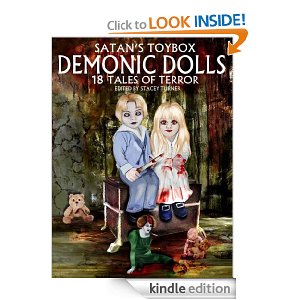
For more on spooky toys, check out Angelic Knight Press’s Satan’s Toybox series:

toybox

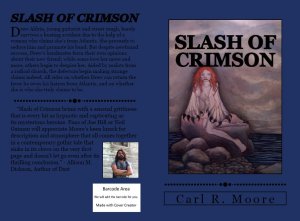
For a story about a mermaid who won’t be treated like no rag-doll, check out Slash of Crimson:

slsh.amz

2012 Year in Review

Happy holidays, everyone—I’ve been meaning to post my year-in-review blog entry for some time now, but life has been interfering as it is wont to do. My daughter was in an accident at school last week and broke her arm severely. She will recover, and with any luck pretty rapidly, as she is six, but it was still a lot to deal with. In addition to that, we’ve had several winter maladies come through our house, and our rickety, bat-infested old Tudor revival has itself had some maladies. On top of that, my sister-in-law has been battling a serious illness with great courage. Her prognosis is good, though she still has a way to go, and our family has made every effort to help her with this as much as we can. And so, it has been no autumn for the faint-hearted.

But—I must say—2012 has been a pretty good year for me writing-wise. I’ll review here some steps forward that I’ve been able celebrate:

Foremest is the release of Slash of Crimson back in June. Small press Rymfire Books did a great job, all thanks going to Armand Rosamilia (author of The Russian Zombie Gun). It’s gotten good reviews, and sold moderately well for a small press release. Nothing makes an author happier than when he or she hears someone genuinely enjoyed their book. There were a few nits/errors that I didn’t manage to extract from the manuscript, but the fault for those lies not in the stars but in my own oversight. Still, overall it felt like a good first release, and I invite anyone who likes Lovecraftian horror with a dash of the darker side of urban fantasy to check out a copy:

Paperback


Another piece of good news came in the form of the acceptance of my short story “Marzly’s Market” for Angelic Knight Press‘s “No Place Like Home—Tales of a Fractured Future“. The story will be in good company, appearing alongside works by Gene O’Neill, Bryan Hall, and Lisamarie Lamb. The release date has been delayed from November of this year to January/February of next, but hey, what’s a Valentine’s Day without a dash of post-apocalyptic dystopian fiction? Thanks again to Stacey Turner, Blaze McRob and everybody at AKP for putting this anthology together:

I would also like to mention a short story that will be included in an anthology published by Dan O’Brien. Dan is a horror author and blogtalk radio host who interviewed me back on July 13th (Friday the 13th, no less). We had a great time talking about contrasting urban landscapes as settings for horror novels, New England architecture, H.P. Lovecraft and even some of his own prolific ways. Check out some of his work here. Back in November, Dan invited me to submit a story for an anthology he is editing. The title of the anthology and release date are forthcoming, but very soon I shall have the specifics for this publication announced as well.

Last but not least, I blurbed my first book in 2012, fellow Rymfire author Brent Abell‘s In Memoriam.

So thanks to all friends and readers for making 2012 a fantastic year. There is more Heaven and Hell to come, let’s brace ourselves for an exciting ride in 2013!

–C.R.M.

Watching my Wife Watch Zombies

Like many couples my wife and I enjoy kicking back with a miniseries now and then. Usually our schedule only permits this a few times a week. Our choices can be eclectic, though they tend to hover around nerdy historical dramas à la Masterpiece Theatre as well as science fiction or the occasional selection of dark thriller/crime noir. 

But lately our choice has been The Walking Dead. Now, although Sarah is not faint-hearted, horror is still not usually the preferred genre when we’re watching something together. On top of that, even though I am a horror fan myself, I don’t usually pick zombie stories. It’s not that I don’t like zombie fiction, rather that I just naturally tend toward vampires, demons, ghosts and werewolves when it comes to the conventions of supernatural monstrosities. So for me, zombies have to be particularly well wrought, like in The Rising, or Flesh Eating Mothers, or Dead Alive, to capture my attention. The Walking Dead is one of the few series (book and show) that despite occasional flaws, fits into this category for me. I’d give it, say, four out of five stars. That’s to say, I do think it’s worth watching, but not necessarily a must-see. But all of this changed when I realized how much more fun it is not just to watch this show, but to watch my wife Sarah watch this show.

Here’s how it happened:

We’re cleaning up the kitchen after putting the kids to bed, trying to decide what to watch. It’s looking like another night of category ‘British Historical Dramas With a Strong Female Lead’.

“What about The Walking Dead?” I suggest.

“You mean that zombie show where they just go around shooting zombies?”

“Well that’s not all they do, but yeah.”

Sarah sighs, tosses the sponge on the sink and cracks a beer. “I don’t know, you know, I’m more about subtlety, not just blood and guts horror. You know, more the psychological kind.”

“Well, this has that, too, because it’s about the interactions of the human characters, too.”

“Yeah, really?” She sips her beer. “You sure it’s not just dudes clearing the mall of zombies, clearing the parking lot of zombies, holing up in an abandoned house and shooting up a bunch of zombies?”

I pause. “Well, maybe a little, but other stuff, too.”

She chuckles, turns on the iMac and glugs her beer. “Poor men,” she says.

“What do you mean?”

“I mean there’s nothing for you guys to do. You go to these office jobs or restaurant or workshop jobs, then you come home and you don’t get to shoot a bunch of zombies. There’s nothing for you to clear. It’s totally bleak for you.”

“Guess I didn’t think of it quite like that…”

“Oh come on, I know you want to shoot zombies. Of course you do. But you don’t get to, and sad thing is, even if you did, you wouldn’t last like, three days.”

“Hey now, you never know. I’m more equipped for the zombie apocalypse than some.”

“Yeah right. Three days. So are we gonna watch this or what?”

She turns on Netflix, and sends me to the refrigerator for a another pair of beers.

We’re not halfway through the episode when she’s writhing around: “Oh please,” she says. “Wait don’t tell me, the cop’s the good guy and the biker’s a pig. How original. They’re surrounded by zombies and they have time to argue about politics? Hell-o, there’s a zombie apocalypse to shoot up!”

“Well, they’re still human,” I say. “And they need to conserve ammo.”

“Then why aren’t they taking machine guns from the dead soldiers and military vehicles? See, you wouldn’t last three days.”

“Well if you don’t like it, we don’t have to watch…”

“Oh please, here we go again! Look at that idiot! He’s hesitating! They’re zombies you fool! Shoot. Them. Shoot them in the heads!”

“I thought you liked psychological horror.”

“Well, I do, but come on, once the apocalypse starts you gotta do what you gotta do, right? Speaking of which, wanna get me another beer?”

“Um, okay.”

When I get back she’s pointing at the screen: “Oh COME ON LADY! You’re worried about whether you should bring a newborn baby into ZOMBIE LAND? Kill it! And whatchya say, you’re THINKING about learning to shoot? You should be killing everything in sight by now!”

“Well, maybe they’re trying to be realistic, I think…”

“Realistic? Please! (In a mocking, high-pitched voice): Oh honey, how can I bring a baby into the zombie apocalypse? Oh I don’t know dear, but you gotta give him a chance? What chance? To be a feral, cold hearted beast? No, who knows, you gotta give him a chance! Speaking of which, when you get a chance, you wanna pour me a Jack ’n’ Coke?”

“Well, I guess I could… how many more episodes are we gonna watch?”

“As many as it takes! Look, wait, that dude’s going nuts with the crossbow! See, he doesn’t hesitate, he’s freakin’ killin’ ’em.”

“Yeah, I’d like to get a crossbow.”

“But you don’t have one, do you? Heh. Three days. If that.”

“It’s getting late, should we really watch another?”

“I don’t know. They finally have the women shooting stuff up, but all this worry, just seems unrealistic. I mean honestly honey, I love you, but if you turned into a zombie, I wouldn’t hesitate. I’d aim between the eyes and make it quick.” She smiles at me and takes a shot.

Of bourbon.

“Well, new season tomorrow night,” she says.

“So I guess this horror stuff’s kinda fun after all?”

“Kinda. Jury’s still out. Looking for ammo, if they know what’s good for ’em. Guess we’ll just have find out if they have what it takes to really clean up and blow out some brains.”

I sigh.

“What?” she asks, giving me a deer-in-the-headlights stare. The beer bottle in her hand is near enough to the stove to flip over and smash into a jagged weapon. Imagining that, I flick off the lights and kiss her goodnight.

“Something wrong?”

“No, just impressed is all, and hoping tonight my dreams will be the funnest three days of my life.”

The Amazing Armand

I first became acquainted with Armand Rosamilia by submitting short stories to some of the anthologies he put out with his small press Rymfire Books. After publishing a few short stories in these, namely “Water Face” (Heavy Metal Horror, 2009) and “As Blood Runs the Night” (Rymfire Erotica, 2011), Armand agreed to publish my novella Slash of Crimson in June of 2012. Rymfire Books also just released the controversial novella In Memoriam, by Brent Abell.

However, lately there has been a major change in Armand’s career focus. While he has always been primarily a writer of his own fiction (such as the Dying Days zombie series), in the past he has worn both the editor’s and the writer’s hat. Now, with his new series Miami Spy Games, Armand is focusing on his own writing and his career is moving ahead faster than the BPM of a speed-metal riff. And so it is with great pleasure that I get to talk with Armand about these new prospects and a few other topics dark fiction fans might enjoy.

I understand your career has taken some great steps forward lately with your new series Miami Spy Games.

Armand: I’m having a blast writing about these characters. While there are some basic horror elements in the stories, namely the zombies (which aren’t traditional zombies, more like totally pissed off people who want to bite your face off), the main premise is the interaction between the ACES team and how they deal with terrorists and threats to the United States, based in Miami.

Also you’ve become a member of the HWA (Horror Writers Association). Do you feel like that’s another milestone?

Armand: Definitely. The HWA has been one of those goals I’ve had since as long as I can remember, and to finally be able to join it is such an honor and thrill for me. Yet another goal I can check off as having accomplished. I am hoping to learn from the experience, meet new friends, and continue to build my career.

Miami Spy Games involves not only zombies (and the fearsome ZOMBIE GUN), but has some cross genre elements as well, including spy-thriller and crime-thriller themes. Any reason you decided to go this route?

Armand: I was asked to write the stories by Hobbes End Publishing (and a shout out to Vincent Hobbes, who believed I was the perfect writer for the project) based on ideas from A.K. Waters. I took on the project because it was a bit different in both structure and style than I was used to, taking me out of my writing comfort zone. I am having so much fun with it, and it is so easy to write. Each ‘episode’ is about 8,000 words (there will be 13 in this ‘season’) and I write it as if it is an hour TV show. That’s the easiest way to say it. I’d love to someday see this becoming a show, and who knows, right?

Do you think Horror as a genre lends itself well to including elements from other genres?

Armand: Definitely. As a writer, I can add so many other elements into it: sex, paranormal, humor, thrills and suspense, crime… limitless what you can add. It only helps to round out the story and keep the reader guessing.

Recently you’ve switched your emphasis from being a writer and a publisher to being more exclusively a writer. Maybe you could talk a little about the pros and cons of both sides of the editorial desk.

Armand: You never turn the editor off. I am constantly editing my work over and over, even with other outside beta readers and editors. I have to sometimes just stop and submit it to the publisher before I go crazy.

Finally, something you and I have in common is that we’re both metal fans. Do you feel like horror and metal go well together? If you had to pick one of your stories to have a soundtrack written for a film version, which would you choose, and what band would you choose to perform it?

Armand: I love Metal. I think it so fits in with horror, and they go hand in hand. I’ve written many stories because of my love of Metal, even putting out the Heavy Metal Horror anthology which you mentioned (and your story kicked ass, by the way!)… my Death Metal novella is an obvious choice because it combined horror/thriller with Metal. I’m sure once it becomes a major motion picture Slayer will be doing the soundtrack, but I’ll also have reunions of great bands I loved doing songs as well, like the “I Hate… Therefore I Am” lineup of CycloneTemple, the “Fistful of Metal” version of Anthrax, and Paul Di’Anno doing a couple of tunes with Iron Maiden again.

Thanks for letting me babble about Metal and horror!

Armand Rosamilia

Home

On “Marzly’s Market”, AKP’s New Anthology, and Sci-fi/Horror

Stoked to announce that my sci-fi/horror story “Marzly’s Market” will appear in No Place Like Home: Tales From a Fractured Future, to be published by Angelic Knight Press in November, 2012. This is a story I began writing some years ago in the form of a novella. Its current form represents a true re-write, for though I liked the initial idea, it wasn’t until I revisited it last summer and completely changed the ending that I realized what it was really about.

Sometime I would like to do a full blog entry on re-writing, as I am re-writing a full length novel that will follow Slash of Crimson in the Crimes of Heaven and Hell series. I feel like I’ve been discovering some important elements of craft during this process and it’s definitely worth discussion.

But for now I’d like to focus on a theme-related topic, namely, that enigmatic sub-genre known as “sci-fi horror”. Many of my favorite novels, short stories and movies fall into this sub-genre. Alastair Reynolds’s Chasm City, Stephen King’s I am the Doorway and John Carpenter’s The Thing to name a few.

The nature of ‘genre’ can be a peculiar thing. A fine line distinguishes convention from cliché. And yet, as a fan of heavy metal music, for example, it is the fusion of things we expect and love (for example, loud, intricate guitar solos) with unusual, original twists, that allows form to fully function, as it were.

And so just for fun, I’d like to list a few conventional themes of sci-fi horror which still grab me when done well. My upcoming story attempts to put a twist on one of these, though I won’t spoil it by saying which…

1)     The Derelict Spacecraft: What happened here? Who were they? Were they taken by aliens, or is it a ghost ship? A haunted house adrift in the stars, a perhaps taken by interstellar plague—such images are enough to draw me in for at least a few scenes to see where the narrative goes. And unlike haunted house thrillers, if you’re a fan of firepower, explosions and pyromania generally, such will usually augment the creep factor with some blazing action along the way.

2)     Parasites: “We are talking to you from within the one called Carl Moore. We are not Carl Moore. Nothing will ever be the same.”

3)     We dug it up, now it’s pissed: Worker: “Doc, what is that thing? Pull me up, man, I don’t get paid enough for this shit!” Scientist: “But it’s fascinating and utterly beautiful.” Worker: “Drop the lifeboats man! Gimme my check and get the fucking lifeboats!” Scientist: “If only we could harness its potential for all mankind. Or at least for our stock price…” Worker: “Nuke it! Nuke the whole place! Grab the espresso machine then NUKE IT ALL!”

4)     It wants to get with our (men/women): “Oh Brad, I know he’s a segmented mollusk but there’s something about him.” “Jane, stand back, let me at  ’im!” “But Brad, I’m carrying his larvae!” “Actually, Jane, about those larvae, they have my eyes.” (Blushes).

…well, there are plenty more themes and if anyone’s up for it, feel free to post them. Still, whatever conventions one might include in a story, its context and characters are what will generate its meaning. So while The Thing and Jurassic Park both feature some deadly ‘dug up’ critters—their creators imbued them with the imagination, style and historical context that supplies each with its own unique function and meaning.

Review of Sarah Pinborough’s FEEDING GROUND

Here is the latest in my All New Books review series. For more on what the reviews are about, how I choose the books, find the link to the original post here. So far this fall the blog’s been mostly book reviews and I plan on doing more. I’ll also be getting some interviews in and will be writing some posts on the Crimes of Heaven and Hell series as well as the book that will follow Slash of Crimson. For now, I hope you enjoy this review of Sarah Pinborough’s Feeding Ground:

Back when my wife Sarah and I lived in Brooklyn, we often met at a saki bar in Williamsburg on Friday nights after work. The place served a kind of pan-asian tapas, squid dumplings and the like, along with carafes of dry saki, ice inside bubbled glass so it didn’t dilute. But it wasn’t these attributes that brought it into a book review of a horror novel. Rather, it was the monster movies playing perpetually on its TV screens.

Instead of the football game or the latest reality show, this place gave you complimentary Godzilla, Rodan, King-Kong. They also played more obscure films, stuff I didn’t recognize at all involving giant lobster men and phantoms on futuristic motorcycles.

Most of the time we chalked these films up to kitsch and camp and swallowed our saki and laughed at the rubber lobster claws.

Occasionally, though, they played something with a more serious tone. Here was the first place I encountered sci-fi noir film 2046, the story of a lovelorn gambler caught in a web of time travel in a vast urban dystopia. This film was utterly kitsch-less. And while it did have action scenes, love scenes and the like, it took its time when necessary with elaborate portraiture and the allowance of the environment to reflect the emotions of the characters.

It is this sort of mood I felt when I began reading Sarah Pinborough’s Breeding Ground. When I first picked it up, I could see that it was the second in a series and the first wasn’t on the shelf. But something about the first chapter led me in and implied that I didn’t need to have read the first installment to get the story.

Thus I descended into a post-apocalyptic London drenched in warm rain and crawling with spider-like creatures that feast voraciously on human flesh and blood. At the opening of the book nearly all of the world’s women have been killed in the process of being used as vessels to give birth to these monsters. But in Pinborough’s flooded, blurry apocalypse, nothing can be quite so clear as ‘killed’ or ‘survived’, as the creatures seem to carry some of the memories of their victims with them.

The story follows several sets of characters, students from an inner city school, students from a private academy, and a group of cocaine dealing gangsters, as they try to deal with this fang-encrusted catastrophe. Most all of the narrative is solemn and shadowy in its tone, and the instances of humor entertainingly grim. If you like to laugh at slapstick zombies throwing limbs at each other, this is nothing like that. It is about constant threat, darkness and the minds of the characters as they try to deal with these circumstances.

A few of the characters come close in their own way to being heroic—Charlie Nash and Blane Gentle-King, the two notorious gangsters both in their own way transform and transcend their circumstances. But ultimately this is a world where darkness is waging a war of attrition to which even the strongest and smartest remnants of humanity will have to in some way succumb.

Back in our Brooklyn days, it was this sort of grim portraiture which occasionally changed the flavor of our weekend saki treats when a serious movie came along. I remember walking home some nights after a J-horror flick or the aforementioned 2046 and taking extra note of the boarded up windows on the crumbling brick buildings as we made our way east. The number of such buildings along adjacent empty lots increased as we came closer to the border of Bushwick and Bed-Stuy where we lived in a once abandoned and minimally restored mattress factory. It is this kind of beauty of decay and of the tragic, along with the triumph of that which is alien, that makes Feeding Ground a gem of a horror novel for those with the palate for it. Indeed, I feel like it’s a tone the genre could use more of these days, for survival is so much more precious when the obstacles are so severe.