Musings on Past, Present and Future (not necessarily in that order)

Hey folks—I know I’ve been absent for a while, but would like to mention that I will be posting a review of Wrath James White’s The Resurrectionist later this week, so please drop in for that.

In the meantime, though we’re a little behind schedule still on the final revisions for Slash of Crimson, publisher Armand Rosamilia has the final manuscript and with just a little more tweaking, it should be ready. Release date forthcoming.

Also my wife Sarah is still wrapping up the cover. Still very excited, thanks everyone for your patience.

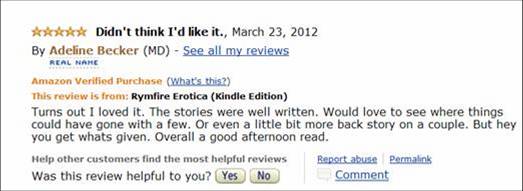
In the meantime, check out this little Amazon review for the Rymfire Erotica anthology. Apparently someone was pleasantly surprised:


Heave oars for the starlit abyss!

On The Editing Process

On editing:

And so my blog entries have slowed a little lately because I am in the home-stretch for the Slash of Crimson edits. Keeping up with writing, editing, blog entries, submissions and reading other writers’ blog entries can be very time consuming. If you’ve also got a family and full time job and a temperamental old house as I do, it can be some rather acrobatic juggling to do even half of it.

And yet, I remain excited about the momentum behind this novella release. In truth, it is a prologue to the first book in The Crimes of Heaven and Hell series. That book came close to publication a year or so ago while being representated by agent Robert L. Fleck. As it stands now, Wake The Wicked will come out sometime after the novella, after certain edits are made and its current state of suspended animation in a demonic Calypso’s cave comes to a conclusion. At that time its ‘cold’ manuscript will be brought to the re-animator’s table looking for a new body and destination. Which brings me to the main purpose of this current blog entry—that is, a few observations on the editorial process. I will come at it by breaking a writer’s relationship with editing into roughly three stages:

Stage 1: Fool Editor Knows Nothing: In this stage, the young writer (or writer young in craft) views criticisms of a story as the jibes of a foolish editor who just doesn’t get young writer’s brilliance. Whether the sentences are too long or short, pace too slow or fast, exposition plentiful or absent, clearly it is the editor’s fault that he or she doesn’t get it. In this stage, the writer might ignore the editor’s comments completely. This of course, works out to the writer’s great loss—loss of time and pace of development with his or her craft.

Stage 2: Oh My God I Suck:  In This Stage, the writer knows the reader is not telepathic unless the writer has made them so through crystal-clear prose. If an idea is not conferred or understood, the writer will bang his or her head against the piano keys and wish they hadn’t taken so many psychedelic drugs back in the 1990’s, or at least, better quality, organic stuff… Writer sees the errors after a few of their own read-throughs, sees how they match many of the editor’s comments. This sometimes results in erring on the side of too much humility (a disguised version of the earlier state of being full of oneself; to go back to Blake “Shame is pride’s cloak”). The risk here is forgetting that there may be some worth in the originality of style and its flavor so long as the writer keeps an ear open to the worthy constructive criticism laced in between the inaccurate stuff.

Which leads to the last stage:

Stage 3: Accuracy and Objectivity: In this stage, the writer has learned possibly the most valuable trick: figure out how to get more than one editor, or ideally, more than two, to review the manuscript. Find out where the editors’ criticisms match and there you likely have some accurate information (e.g., if three out of four competent readers say Chapter 3 doesn’t work, it probably doesn’t). That doesn’t mean one should ignore comments from solo editors who know how to rock the comment-pen. Instead, the writer in Stage 3 has developed a sense of balance and patience, of pacing and dramatic gesture. Thus it is possible to separate the important comments from the unimportant comments with a discriminating eye. And if a certain comment remains blurry, we might put to use Tony O’Neill’s saying, “When in doubt, cut it out.” Either way, the story must live and breathe, and all edits must aim to make the reader thirst to turn the page.

Of Oxford commas and Undead Poodles

I am putting on my grammar-geek-hat this morning and offering a post about the serial comma, a.k.a, the Oxford comma. Some say use it, others say lose it. Personally, I think a point not often made is that it’s often not necessary due to context.

First of all, I wouldn’t slow a sentence with an extra comma if the nouns in the list have no chance of being appositive. For example:

Mary, Ed and Lisa went to the pub.

There’s no way Ed and Lisa constitute Mary, so why use the comma?

Now, it’s a worthy distinction to put the comma in when it can clarify a relationship:

Mary’s concubines, Ed and Lisa, went to the pub.

Unless Mary has enslaved Ed and Lisa to her whims, a comma between ‘Ed’ and ‘and’ would be useful in specifying that ‘Ed and Lisa’ are not her concubines:

Mary’s concubines, Ed, and Lisa, went to the pub.

But what if we’ve already been reading a story about an ex-veterinarian named Mary who has gotten into undead animal husbandry? A pair of frisky ghoul-poodles have escaped and now they’re following around her friends hoping to get lucky. In that case, we probably know from the context that Ed and Lisa are not Mary’s bed slaves, but the marks of the rotted, curly-haired canine concubines…

…and the comma can be omitted.

Thoughts on Book Covers

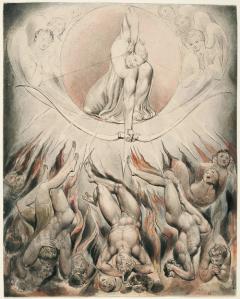
They say you can’t judge a book by its cover, however, it’s okay to buy a book for its cover. I remember being a kid and buying comic books for their cool covers only to discover that the scene depicted does not take place inside or having anything to do with the story. Hence, though I have contacted two amazing artists for possibly working with my publisher on a book cover for Slash of Crimson, both fell through for different reasons. In both cases they were very good reasons, one being business-related and having to do with an artist’s gallery show; the other being an issue of aesthetics. The moral of the story is that, just as finding someone attractive doesn’t mean they are necessarily the love of your life (or even worth a torrid affair), so too any cool image may not be the right for your book. Still, I’m confident something fitting will come along, likely found by the editor who has more experience with this sort of thing. I’ll be sure to post it here as soon as this happens. In the meantime, let’s enjoy a classic drawing by William Blake, which at least sets up the mood for celestial tensions:

Blake’s Downfall of The Rebel Angels 1808 illustration to Milton’s Paradise Lost.

Book Review: Scott Nicholson’s THEY HUNGER

The concept of putting the “fangs” back in vampires gets a lot of buzz these days. In large part because of Stephenie Meyer’s Twilight series, but it can also be traced back to Anne Rice. And yet, though Anne Rice’s vampires certainly had detailed “sensitive” sides, her novels still contain plenty of blood and guts, as well as varied species of vampires that include near mindless revenants hungry for a blood meal and nothing else.

From books to TV to movies, whenever we encounter these creatures, most fans of pop literature and media can quickly recognize the categories. They know which type they’re dealing with in any given work.

Yet with Scott Nicholson’s They Hunger, we get more than just a reaffirmation of (as the back of the book offers us) “Vampires. No Interviews.” Rather, Nicholson ups the ante and gives us vampires with a relatively original wilderness twang. Think Dracula meets the Wendigo. Of course, we’re dealing with Scott Nicholson, an enigmatic American horror writer from North Carolina who is capable of echoing Stephen King’s more prosaic moments between laying out Brian Keene-like scenes of enticing mayhem.

The novel opens with a group of professional whitewater rafters setting out on an expedition down a treacherous mountain river to promote a new type of raft. Nicholson draws an intriguing cast of characters: corporate managers, washed up reality TV stars, veteran outdoorsmen in search of redemption and a beautiful adventure-photographer with a twang of the femme fatale. Thrown into the mix is a nutcase family planning clinic bomber fleeing through the nearby woods from a pair of FBI agents. This setup alone could well sustain a good rural noir novel à la Tom Piccirilli.

But of course, the story takes an abrupt and immediate turn: when one of said nutcase’s bombs accidentally blows up an underground cavern, it unleashes a flock of vicious vampires that resemble gray, humanoid, undead bats. We’ll stop the summary there and only add that Nicholson’s prose delivers a heady narrative of the ensuing pursuit and struggle for survival.

And yet, probably the most interesting aspect of this novel is that it avoids being simply, “small group attacked by awful horrors.” True, wondering who will survive the vampire onslaught motivates us to turn the page. But the difference between Nicholson and Keene is the type and style of character development we get along the way. I have always been impressed by the latter’s ability to develop characters swiftly in just a few lines. With Nicholson, I get a sense that he has the skill to do the same thing, yet gives us maybe two more sentences of stream-of-consciousness thought amid the action. This delivers a sense of emotional reality that gives the characters just a little more substance. And so when the fangs sink in, the reader can truly feel the bite.

I am not necessarily arguing one method is ‘better’ than the other; rather, I think we can see an interesting amalgam of the Stephen King suspense style horror coupled with the faster paced, apocalyptic zombie-attack style horror more popular in recent years.

So if you like dark literature and savor it like a single malt scotch, pick up They Hunger and try it out. The flavor is fresh, potent and has a singular twist that will leave you satisfied and wondering what else this author has on offer.

Is That an Old Book? Review Series

As a component to this website on my books, I would like to introduce a book review series called Is That an Old Book?  I’ll be running it on a roughly monthly basis; see below for what it entails:

So I walked into this bookstore in 2010 and I was asking for one of Tony O’Neill’s early novels, which came out around 2008.  I asked, “Do you have Down and Out on Murder Mile?”

The cashier said, “Hmmm…” …clackety-clack on computer… “Is that an old book?”

I held my tongue, despite its rabid wish to utter: “No, it is not an old book. THE ILIAD is an old book.  A book that came out in 2008 is still a NEW book; a book that came out in the 1990’s is still a relatively new book.  Even the eighties, even the seventies—Red Dragon, The Xenogenesis Series, all could be arguably dubbed contemporary fiction in relation to the full history of storytelling…  So no, it’s not an old book.  What’s more, since any book is new for someone cracking it for the first time, all of them, Gilgamesh, Gulliver, Oroonoko, they’re ALL NEW BOOKS…”

And so I’ll hold my tongue no longer, and now begin a series of short book reviews that includes titles released weeks, months, years, decades, even centuries ago…

As most of these reviews will be posted on Amazon, I’d like to make a brief statement about ratings.  It goes like this:  If I am taking the time to sit down and write about a book that I read, it means I’m giving it five stars.  I do this because I have found something interesting and unique in the book to make it worth buying and reading. It does not mean that the book has no typos, never drifts into too much exposition or has cut out all redundant adverbs.  Yes, quality prose matters, and most books that make it into the review will reflect this. But, as Mary Shelley and H.P. Lovecraft exemplify, eccentricities of style, even indulgence and poor grammar, can occasionally be offset by vision, excitement and originality. And so, to those who may argue that I do any sort of disservice by giving high ratings, while fair enough on one level, I would counter my goal is to be more like a curator at an art museum than a judge on American Idol—

And so, let’s delve into the collection and see what we discover…

First Review: Scott Nicholson’s They Hunger (see following post).

Slash of Crimson, debut novella

Thus the posts below offer a summary of my most recent publications. They don’t encompass all magazines and anthologies in recent years, however, they do represent a more consistent theme that leads up to the novella that will be released in March. For Slash of Crimson is the prologue to a series of novels whose characters will disturb nature, science and religion with their infectious abberrations, and yet may also inspire the strangest sympathies and reflections on the oldest of stories, indeed. In the meantime much blood will be spilled, and if it is entertaining, well hey, we can’t exactly call it meaningless…

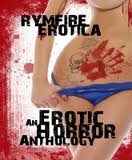
I’d like to thank editor and writer Armand Rosamilia in advance of the release, and recommend all of the great fiction and non-fiction products available from Rymfire Ebooks and Carnifex Metal (click on pic below to link the Rymfire store). I will also bring some book reviews into this blog, as well as feature entries on writers I admire. I hope those of you into horror and dark fiction enjoy all of it, and when the time comes, pick up a copy of Slash of Crimson for your bookshelf or Kindle.

Regards, thanks and until next time,

–C.R.M.

As Blood Runs The Night

Short story “As Blood Runs The Night” appears in the recently released Rymfire Erotica anthology, published by the eponymous Rymfire Ebooks. Here editor Armand Rosamilia has put together a great anthology full of both avarice and allure. My story revisits some of the most secret and depraved corners of Brooklyn. Here in the barren lots that cling to the colossal carcass of New York lurk the most intoxicating of apparitions. Though perhaps not immune to all human emotion, you won’t find these blood-drinkers crying over lacerated hearts…

See the Amazon link below to purchase for Kindle or hard copy.

Heavy Metal Horror

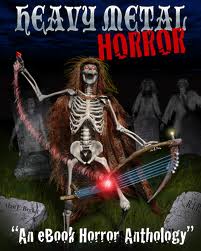
Following “Sisters Inside Out” I published a story titled “Water Face”, the first with Rymfire Ebooks, in anthology Heavy Metal Horror. It was a thrill to place it with a publisher who had a taste for metal culture but also cared about prose, plot and character.  “Water Face” is also the first of my Brooklyn stories to see print. Check it out at the link below ( $0.99 on Amazon.com):

Short Stories

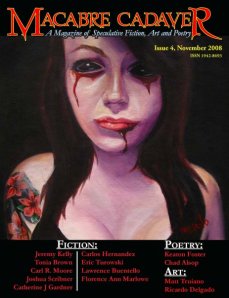
So while I’m putting things together for this site, and in preparation for the release of Slash of Crimson, I thought I’d post a few links to places where previously published work can be found. The first comes from a magazine that was out a few years back called Macabre Cadaver. The story’s titled “Sisters Inside Out” and has a special place in my heart as one of the darkest efforts to date. It can be found as a PDF file for free online (see link below).